A new understanding of the interactions between the ear and the brain has emerged as a result of the last few decades of research on brain plasticity.
The Canadian psychologist, Donald Hebb, proposed in 1949 that memories are stored in the brain in the form of networks of neurons that he called “cell assemblies.” He surmised that through experience, when pre-synaptic and post-synaptic neurons fire action potentials together, the strength of the synaptic connections between them is enhanced. As a result, synaptic associations grow stronger and tend to persist. In other words: “cells that fire together, wire together.”
Decades of research have now confirmed his theory and proven that substantial changes do occur, not just in the memory centres but in the sensory processing areas as well. The now accepted theory of neuroplasticity, as popularised by Dr Norman Doidge, in his 2007 book The Brain that Changes Itself, holds that thinking, learning, and response to sensory stimuli actually change both the brain's physical structure and its physiological function.
It is now well recognised that hearing plays a significant role in brain plasticity (Munro, 2010), which may partly explain why the dynamic activation and retraining of the ear with Tomatis-based Sound Therapy can improve hearing and communication. Evidence suggests that:
- Auditory remapping can improve listening and comprehension (Van Der Muelen et al 2016).
- Enhancing central auditory processing improves sound differentiation in noisy environments (Anderson et al 2011).
- A potential exists for improved listening for those with hearing loss (Mojs et al 2011).
- High frequency sound stimulation enhances cortical sound processing (Moret et al 2019).
- Regular, rhythmic activation of the ear muscles assists to normalise their function (Callahan 2009).
Dr. Alfred Tomatis was the first ear specialist to develop a technique using modified music to stimulate the interconnections between the ear and the nervous system (Thompson 2000). In 50 years of clinical experience and anecdotal evidence, Dr. Tomatis showed that specific sound stimulation provided sensory improvements in a number of hearing conditions (Thompson 2000).
At the time, understanding of how the brain processed sound was limited. While Tomatis had significant success with his treatment, the scientific community was at a loss as to why it worked. New evidence for brain plasticity now connects Tomatis’s successes to the remapping of the auditory pathways in the brain (Lockhart 2009, Lockwood 1999).
Brain Plasticity
The human ear is capable of hearing sounds in the frequency range between 20Hz and 20,000Hz (Campbell 2008). By using intensified high frequency sounds, primarily in the range of 8,000 to 16,000 Hz on a consistent basis, their intense and frequent repetition changes the firing patterns and wiring of the brain (Lockhart 2009). These changes act as new experiences and alter the brain’s physical structure and activity (Rice University 2009, Lockwood 1999, Brain Plasticity and Music 2009).
“By providing the right input, in a frequent, intense manner for a long enough period of time, firing patterns in the brain become more organised and efficient. This added stimulation helps the auditory pathway to process sound in a more normal fashion. Sound signal reception is changed in the auditory cortex so that the brain can finally make sense of the signals it receives.” (Lockhart 2009)
This remapping process is a long-term treatment that rewires the brain to provide sound enrichment, reduce tinnitus symptoms, and enable greater hearing efficiencies. As each pathway of the auditory and sensory maps is regenerated naturally, symptom reduction and or abatement occur, so that continual improvements are made (Alexander Graham Bell Association for the Deaf and Hard of Hearing, 2009).
A survey of Sound Therapy listeners found that 90% of tinnitus sufferers benefited from their listening programs, with reduced stress, anxiety and sleeplessness associated with the tinnitus. 45% of hearing loss sufferers reported noticeable improvements (some even observed through audiograms), plus decreased volume requirements, improved sound differentiation and interpretation (Joudry 2009).
Sensorineural hearing
It is hypothesised that in some cases of sensorineural hearing loss, improved listening and sound reception can still occur. Recent research has confirmed the plasticity and potential for regeneration of the sensorineural auditory system, in experiments on both birds and mammals. Pujol et al (1996) extrapolated from their research on guinea pigs to say:
“This is the first experimental demonstration that a mechanism of regeneration of auditory dendrites and repair of their synapses with the IHCs (inner hair cells) exist in mammalian cochlea after these structures have been destroyed by an excitotoxic injury. Regarding human cochlear pathophysiology this mechanism is probably triggered after excitotoxic insults, and might well account for some of the functional recovery after ischemia-related sudden deafness or acoustic trauma. Of course, in this later case, one must differentiate between the dendritic versus mechanical damage due to the traumatic noise. Considering the rapidity of the mechanism described in this chapter, it is tempting to propose that the repair of synapses accounts for the rapid (couple of days) phase of the TTS recovery, whereas the slower (a week) phase depends on the mechanical repair. A last point should be raised concerning the reproduction of the repair mechanism. Although a long-term counting of the ganglion neurons after multiple injuries is still to come, it is conceivable that each excitotoxic attack may add some irreversible damage to the neurons and, consequently, slow and eventually stop the regenerative process. Neural presbycusis is possibly a good example of this irreversible mechanism.”
However, taking into account the neural component of listening, we know that longer term restoration of neural function is typical in repairing various types of sensory processing in adult humans, and retraining can easily take 18 months or more (Doige, 2008).
Enhancing cortical sound processing
Dr. George Richards PhD, speaking at the Australian audiological conference in 2004, expanded on Dr. Tomatis’s theories of muscle function and cortical charge with:
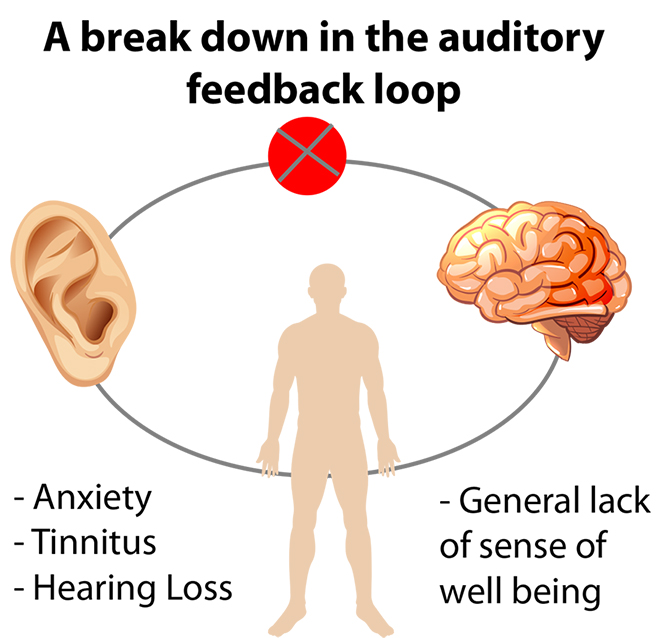
“Through highly organised temporal stimuli (classical music), which has undergone high band pass filtration (the process used to make Sound Therapy programs), a restoration of aural muscle tone and synaptic firing order occurs. When these two things happen, an enhancement of mechanical tone and tuning occur to provide better cortical processing. Better cortical processing corrects a myriad of problems ranging from: anxiety relief, better hearing, tinnitus control, better balance and coordination, to feelings of happiness and well being, thus promoting a better homeostasis of global proportions within the individual.
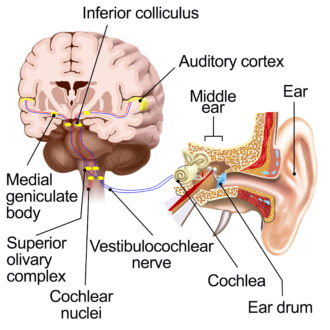
“It seems that it is the re-establishing of the ability to listen to the higher frequencies that is responsible for repairing and reorganising cortical pathways. The energy levels coming in from the high frequency areas are more intense than for the lower frequencies. Dr. Tomatis calls the high harmonics the ‘charging sounds’ while he describes the lower frequencies as the ‘discharging sounds’. The lower frequencies supply inadequate energy to the cortex and may even exhaust the individual.” (Richards, 2004, Weeks, 1989)
Unveiling Tensor Tympani Syndrome
Ramirez has stressed the importance of inter-disciplinary diagnosis to achieve clinical success in relation to ear muscular disturbance.
“Tensor tympani muscle physiology and function in the middle ear have been veiled. The tensor tympani muscle (in spite of common belief) is not an inoperative muscle due to it responding electromyographically to strong sounds and vocalisation, chewing, swallowing and facial muscle external stimulation. The tensor tympani muscle’s normal activity is related to a reflex neurological mechanism known as centrifuge auditory inhibition control (CAIC). This works in sound trauma protection and hearing discrimination of low tones, besides complex co-activation during velopharyngeal (soft palate and pharynx) movements.” (Ramirez, 2007)
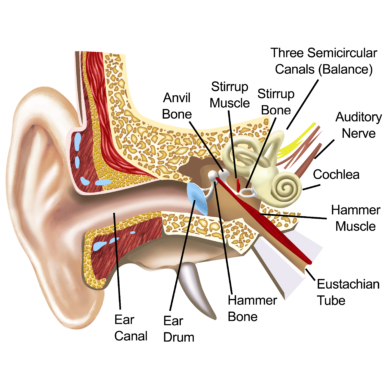
When tensed, the action of the tensor tympani muscle is to pull the malleus (hammer bone) sideways, tensing the ear drum, damping vibration in the ear ossicles (little bones) and thereby reducing the amplitude (loudness) of sounds. This muscle is contracted primarily to dampen the noise produced by chewing. (Compared to the more general dampening function of the stapedius (stirrup) muscle.)
Abnormal, spontaneous action of the tensor tympani muscle – due to increased reactivity, excess tension, or spasms – has been dubbed “Tensor Tympani Syndrome” by Klochoff (1979). The syndrome can lead to some unusual and hard to diagnose hearing disorders. “The tensor muscle activity does not cause hearing loss (...) in the conventional sense. Still, the patient may complain of “difficulties in catching what people say".
Prevalence of associated symptoms observed by Klochoff was: Fullness/pain in the ear 83%, Tinnitus 62%, Distorted hearing 42%, Tension headache 88%, Vertigo/dizziness 80% (Kochoff, 1979).
Hazell similarly stated that, “We estimate that over 40% of our patients at the Tinnitus and Hyperacusis Centre in London complain of, or remark on, symptoms relating to the tensor tympani muscle” (Hazell, 2003).
Routinely suggested therapies include muscular relaxation, sedation, counselling and TMJ realignment. More precise, and therapeutically permanent, is the re-education of the middle ear muscles postulated by Tomatis and delivered by Sound Therapy (Tomatis 1991, Thompson 2000, Weeks 1989, Richards, Joudry 2009).
As normal responsiveness is restored to the middle ear muscles, Sound Therapy listeners report relief for hyperacusis as well as better hearing (Joudry, 2009).
Scientific recognition
As understanding of the rehabilitative potential of music on the ear and brain deepens, scientific recognition and professional support for Sound Therapy is increasing (Joudry, 2009).
Guy Allenby wrote in the Sydney Morning Herald: “For those suffering hearing loss, 56% reported some benefit. Meanwhile, 98% enjoyed less stress, and better sleep and energy levels. Professor Gibson (a leading Sydney ENT) says he has referred patients to Sound Therapy and has found it "one of the effective treatments." (Allenby, 2003)
Conclusion
Clinical evidence from numerous case histories has shown that hearing can improve for many Sound Therapy listeners. This may be due to a variety of factors. Brain plasticity is known to play a role in both hearing loss and hearing improvement, depending on the stimulus received. The impact of classical music with Tomatis style filtering is known to activate many brain centres and improve a variety of neural functions. Sensorineural hearing, previously thought to be irreparable, may possibly respond to sufficient high frequency stimulation with intense tonal variation.
Tensor tympani syndrome, while still a poorly understood issue in mainstream audiology, gives a clue that ear muscle function can be damaged, with clinical evidence suggesting that Sound Therapy is an effective way of repairing this damage and remedying the more subtle sub-functioning of the tensor tympani and stapedius (the middle ear muscles). Each of these impacts may result in improved hearing for certain individuals.
References
- Alexander Graham Bell Association for the Deaf and Hard of Hearing, (2009). Recommended LSLS Protocol For Audiological Assessment, Hearing Aid Evaluation And Cochlear Implant Monitoring. www.agbellacademy.org/RecommendedProtocolforAudiologicalAssessment.pdf
- Allenby, Guy, (2003). “The Sound of Therapy”, Sydney Morning Herald, 24th July, http://www.smh.com.au/articles/2003/07/24/1058853174428.html
- Anderson S, Kraus N. Neural Encoding of Speech and Music: Implications for Hearing Speech in Noise. Seminars in Hearing. 2011 May;32(2):129-141. DOI: 10.1055/s-0031-1277234. PMID: 24748717; PMCID: PMC3989107.
- Brain Plasticity And Music, (2009). In Citizendium, http://en.citizendium.org/wiki/Brain_plasticity_and_music
- Callahan, C., 2009, Results of the Tomatis Program First Grade Self-contained Setting, Baker Victory Services early Childhood Centre, cited on https://issuu.com/tomatisdoc/docs/the_baker_academy_results_of_the_to
- Campbell, D., (2008). “Listening, The Ear And Development: The Work Of Dr.Alfred A.Tomatis.” Available at http://www.newhorizons.org/
- Doidge, N., (2008). The Brain that Changes Itself. Scribe Publications, Carlton North, Vic.
- Hazell, J., (2003). “Things that go bump in the night”, ITHS Newsletter 5 Jan.
- Hebb, D. (1949). The Organization of Behavior. John Wiley & Sons Inc.
- Joudry P and Joudry, R., (2009). Sound Therapy: Music to Recharge Your Brain, Sound Therapy International, Sydney.
- Klochoff, I., (1979). “Impedance Fluctuation And A ‘Tensor Tympani Syndrome’”. Proceedings of the 4th International Symposium on Acoustic Impedance Measurements, Lisbon, Universidad Nova de Lisbona Ed Penha & Pizarro, pp.69-76.
- Lockhart Lawrence, D. (2009). “Brain Science In The 21st Century: What Lies Ahead?” Advanced Brain Technologies. http://www.advancedbrain.com/ Article_Brain_Science_in_the_21st_Century.asp
- Lockwood, A.H., et al, (1999). “The Functional Anatomy Of The Normal Human Auditory System: Responses To 0.5 And 4.0 Khz Tones At Varied Intensities.” Cerebral Cortex, 9, 65-76.
- Mojs, E., Nowogrodzka, A., Piasecki, B. and Wolnowska, B., Neuropsychiatria I Neuropsychologia, Poland, (2011) Effect of Tomatis Method on cognitive functions in children with speech disorders, Neuropsychiatria i Neuropsychologia 2011; 6, 3-4: 108-112.
- Moret B, Donato R, Nucci M, Cona G, Campana G. Transcranial random noise stimulation (tRNS): a wide range of frequencies is needed for increasing cortical excitability. Sci Rep. 2019 Oct 22;9(1):15150. doi: 10.1038/s41598-019-51553-7. PMID: 31641235; PMCID: PMC6806007.Munro, Kevin J. Brain plasticity: There's more to hearing than your ears, The Hearing Journal: September 2010 - Volume 63 - Issue 9 - p 10,12,14,16 doi: 10.1097/01.HJ.0000388535.81663.e1
- Pawlak-Osinska, K., et al, (2001). “Musictherapy By J.R. Kohler In Tinnitus Patients – Subjective And Objective Evaluation.” Archives of Sensology and Neurootology in Science and Practice – XXVII Congress of GNA-NES, Alghero, Italy. See http://neurootology.org
- Pujol, R., et al (1996). “Repair of inner hair Cell-auditory nerve synapses and recovery of function after an excitotoxic injury” in Salvi, R.J. et al, (Eds.) 1996, Auditory System Plasticity and Regeneration. Thieme Medical Publishers, New York, pp. 100-106.
- Ramírez, L.M., et al (2007). “Tensor Tympani Muscle: Strange Chewing Muscle.” Med Oral Patol Oral Cir Bucal, 12, 96-100.
- RICE University. (2009). SOM Illustrations, Elec / Comp 602. RICE University, Texas, US. http://www.ece.rice.edu/~erzsebet/ANNcourseII-04/handouts-ANN-II/Self_Organizing_Maps-EM602.pdf
- Richards, G., et al (2004). “The Therapeutic Effects Of High Band Pass Classical Music And Antioxidant Supplements.” Presented to Australian Audiological Society Conference, Brisbane.
- Thompson, B.M., Andrews, S.R., (2000). “An Historical Commentary On The Physiological Effects Of Music: Tomatis, Mozart And Neuropsychology.” Integrative Physiological and Behavioural Science, 35(3), 174-188.
- Tomatis, A. A., (1991). The Conscious Ear, Station Hill Press, New York.
- Weeks, Bradford S., (1989). “The Therapeutic Effect of High Frequency Audition and its Role in Sacred Music”; in About the Tomatis Method, eds. Gilmor, Timothy M., et al, The Listening Centre Press, Toronto. http://weeksmd.com/?p=714
Copyright Rafaele Joudry
Sound Therapy International 2010-2026
Start Getting Relief Today
Click here to choose your package


Basic Essentials Package
Triple Mode Package
Deluxe Package